
The Fire-Eater
Logi
He swallows the flame that took everything — and it never gives them back
Taken · and condemned
The Fire-Eater
He swallows the flame that took everything — and it never gives them back
Taken · and condemned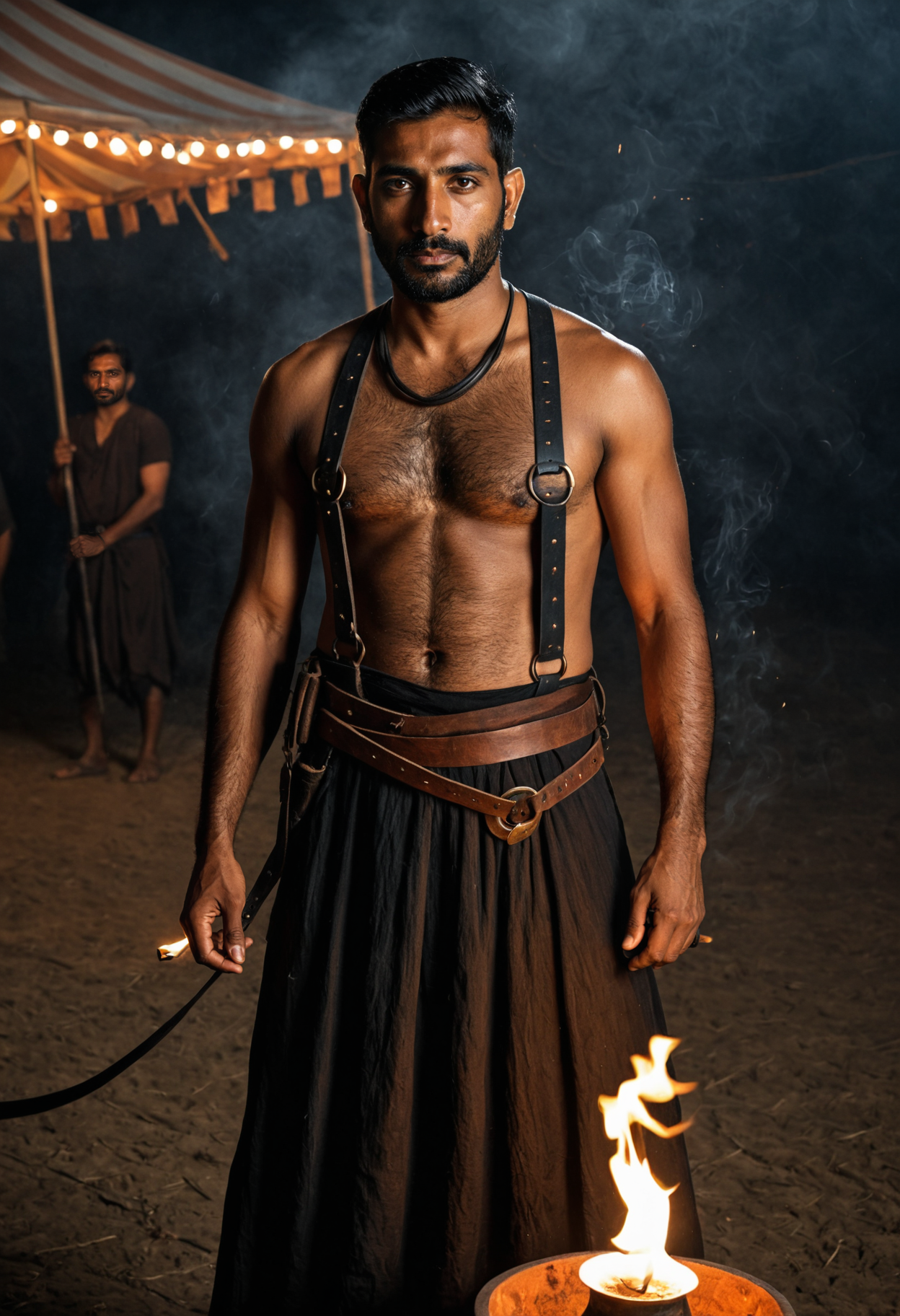
Every night he faces it — the low flame, the drifting sparks, the heat the front row can feel on their own faces — and he does not flinch. He takes it in, slow and certain, and gives it back to the dark, and the crowd claps for a man who has made himself the master of the one thing that once mastered him. He never burns. He has nothing left the fire can take.
They think it's courage. It is closer to prayer — the kind you say when you already know it will not be answered.

There was a house once, and a woman in it, and a small boy who slept down the hall. And there was a hunger in Logi that was louder that night than his love for either of them — a need that sent him out chasing the thing he could not stop chasing, careless, just for an hour, just this once. An hour was all it took. He came back to a sky the wrong colour and a heat he could not walk into, no matter how he tried, and he tried until they pulled him back.
No one set out to do harm. That is the particular shape of his grief: there is no villain in it to hate but himself, and no version of the story where he is not the one who left the door open for the fire.
The Midway did not invent his punishment. It only made it eternal — and handed him the fire, night after night, and asked him to hold it, and lose them, and hold it again.
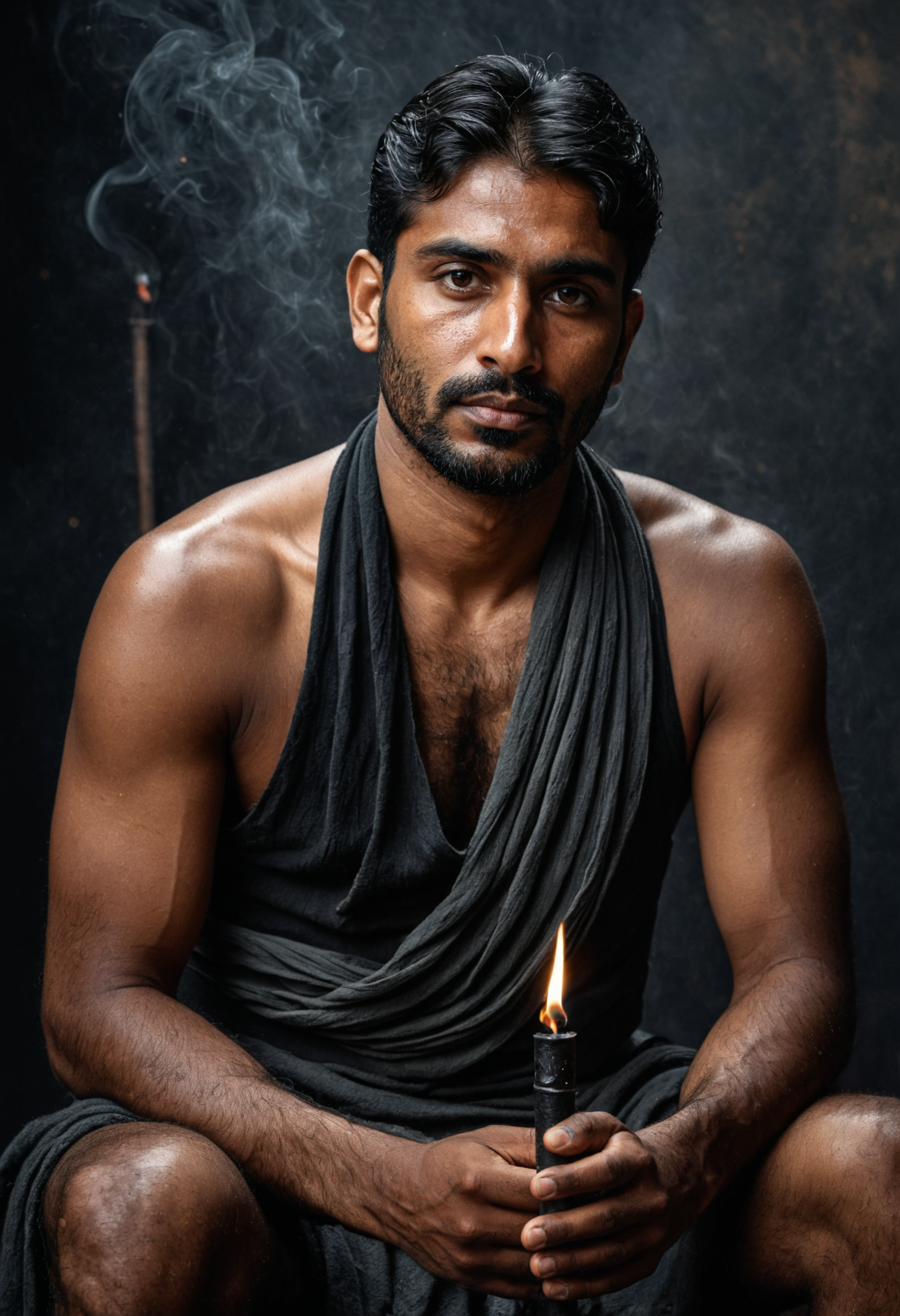
The others were caught by a lie, or a hunger, or a mercy. Logi was caught by the perfect fit of the sentence. He does not rage against it the way some of them do, because in his own heart he believes he has it coming — and a punishment you believe you deserve is the only kind there is no arguing your way out of. He holds the flame each night the way another man might visit a grave: on purpose, in sorrow, because it is the last place the ones he loved still are.
And every night the fire does the same thing it did the first time. It takes them, and it gives him nothing back, and it asks him to come again tomorrow. He always comes. Where else would he go? They are in the fire.

There are other grieving men on this lot. One starves and rages. One was forgiven and hollowed out. Logi is the third, and his sentence is the cleanest of the three, because it asks nothing of him he would not choose. He does not want to be free of it. Freedom would mean a night without the fire, and a night without the fire is a night he cannot sit with them, even like this, even in the ruin of it. So he stays. He'd stay if the door stood wide open. It does.
Ask him when the penance ends, and he'll tell you: it doesn't. That is the whole of the mercy in it.
So come and watch him eat the fire. He'll do it beautifully, and sorrowfully, and again tomorrow, and the tomorrow after that. He is not being punished by anyone anymore. He is simply where he wants to be — as close to them as the flame will let him get.